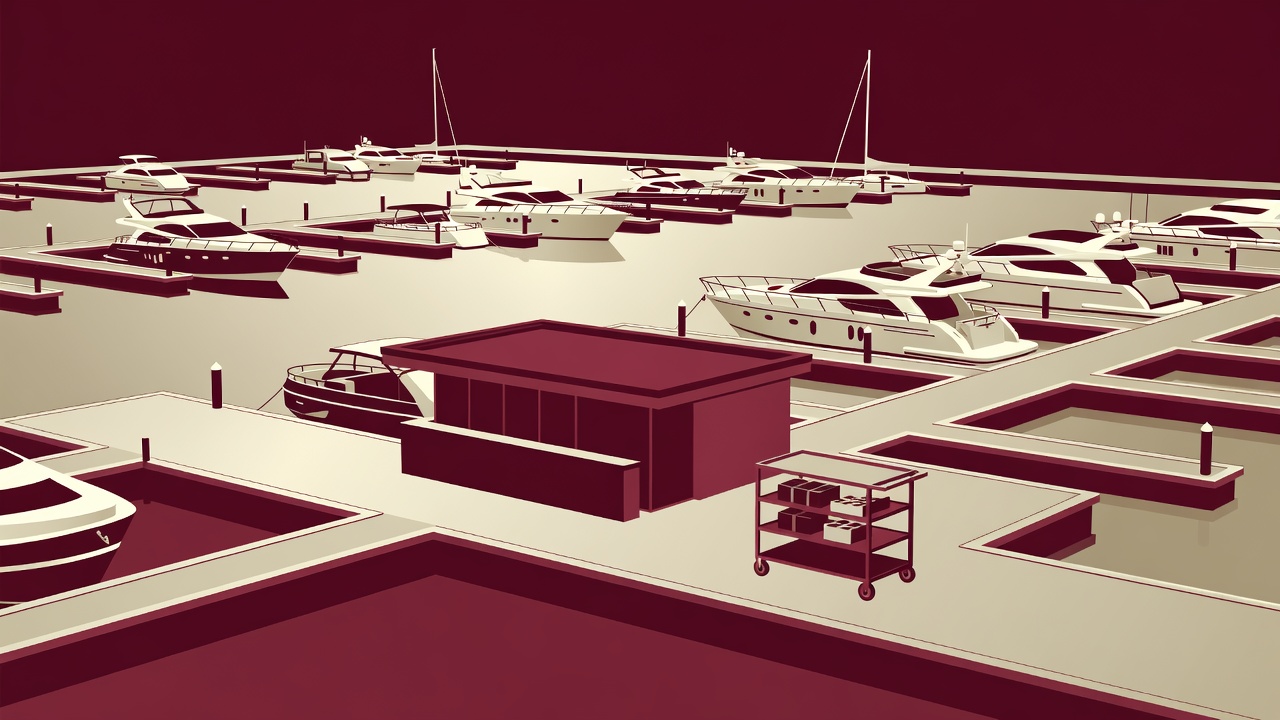
A marina can be a practical reset between quieter anchorages: a place to replenish water, receive provisions, manage waste and enjoy an uncomplicated evening ashore. Yet the presence of berths on a map says little about whether a particular yacht can be accommodated, how arrival works or whether the shore facilities suit the group.
Begin with the vessel and the purpose of the stop. An overnight for a restaurant visit has different priorities from a crew change, a technical appointment or a full provisioning day. Identifying that purpose helps you ask precise questions and avoids selecting a marina mainly for its photographs.
Send a complete vessel brief
Provide the marina with accurate length overall, beam and draft, together with any relevant appendages or equipment extending beyond the hull. Include vessel type and the operator’s requested details. A catamaran’s beam, for example, may materially affect berth suitability and pricing, while draft can limit access or available positions.
Ask how the vessel dimensions are assessed and what the quoted berth includes. Water, electricity, assistance, waste handling and other services may be charged or arranged separately. Do not assume a general rate applies to the actual yacht, dates or allocated berth. Obtain a written confirmation of the agreed service and applicable conditions.
Confirm the process, not only the reservation
A reservation acknowledgement is useful, but it should be accompanied by current arrival instructions. Confirm when to contact the marina, which published communication channel to use, whether staff assistance is arranged and what to do if arrival is delayed. Radio channels and procedures vary; never rely on an old review or a generic assumption.
The skipper should review current approach information, depths, notices and forecast conditions independently. Berthing arrangements may involve laid moorings, pontoons or other local systems, and the crew should understand their roles before entering. Guests who are not handling lines need a safe place to remain clear of the manoeuvre.
Prepare documents without oversharing
Ask the marina or operator for the exact documents required for the intended visit. Depending on the jurisdiction and circumstances, these may include vessel registration, insurance, crew information and evidence of the skipper’s qualifications. International movements can introduce additional reporting or clearance requirements that a berth reservation does not satisfy.
Use the marina’s verified contact details and preferred secure process for sensitive documents. Do not send passport copies or payment information to an unverified address found in an unsolicited message. Retain the booking reference and the agreed terms somewhere accessible offline, especially when connectivity during the passage may be uncertain.
Look at the shore through your group’s eyes
A comfortable arrival depends on the route from yacht to shore as much as the berth itself. Ask about gangway arrangements, pontoon movement, steps, distances to facilities and the suitability of the allocated position for anyone with reduced mobility. A marina described as accessible does not necessarily make every vessel’s boarding arrangement accessible.
For families, discuss safe movement near the quay and supervision during loading. For guests arriving separately, confirm the meeting point, transfer access and luggage arrangements. If quiet sleep is important, ask about nearby nightlife, service areas and scheduled events, while recognising that a marina cannot promise silence.
Use real marinas as research starting points
Marina di Portisco in Sardinia, D-Marin Lefkas in Greece, ACI Marina Split in Croatia and Porto Montenegro in Tivat are examples of established facilities in different cruising contexts. They are not interchangeable options or endorsements. Each requires direct confirmation of vessel fit, availability, current services and the rules applying to the voyage.
Compare the onward route as carefully as the marina itself. A convenient airport transfer may be valuable, but so may a berth that avoids an unnecessarily exposed final passage. Consider local provisioning access, fuel arrangements and technical support in relation to the actual needs of the yacht rather than a generic facilities checklist.
Leave with the next stop in mind
Before departure, settle accounts, return access items and check whether water, provisions and waste arrangements are complete. Confirm the departure procedure with the marina and the next plan with the skipper. If weather changes the schedule, communicate early and check whether any berth extension is possible rather than assuming it will be.
Good marina planning is quiet work: a few accurate dimensions, a clear confirmation and the right questions asked in advance. Its reward is less time solving avoidable problems and more time enjoying the coast.