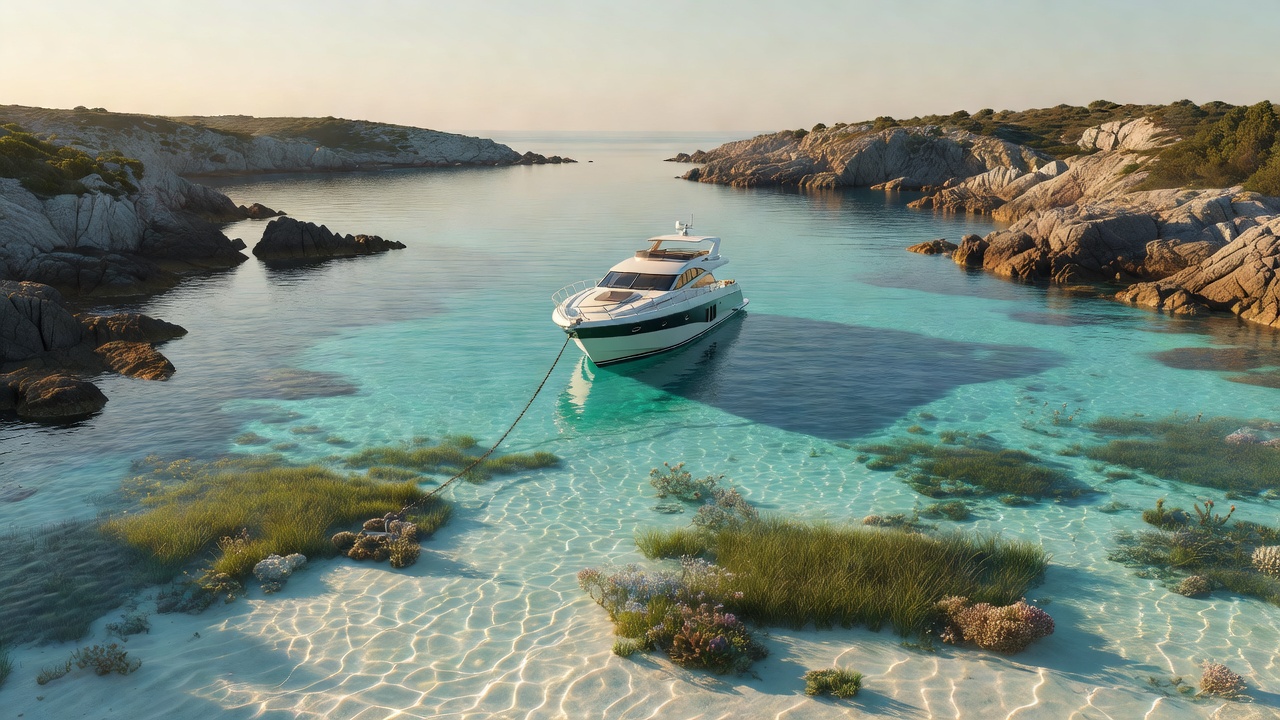
A quiet anchorage is a relationship between place, conditions and timing. A cove that feels restful at lunch may become uncomfortable after the wind changes. A sheltered-looking shore may conceal restricted seabed, heavy tender traffic or limited room to swing. Begin with the kind of day you want aboard, then test whether the location can support it responsibly.
For a mixed-experience group, a protected lunch stop close to a reliable overnight alternative can be more rewarding than a distant, celebrated bay. It reduces the temptation to remain somewhere unsuitable because the next option feels inconvenient. A skipper’s assessment must take priority over an attractive photograph or a suggested itinerary.
Read shelter as a changing condition
Consider forecast wind direction and strength, swell entering around headlands, gusts descending from high ground and the conditions expected overnight. A short fetch in one direction does not guarantee all-round protection. Ask whether the anchorage remains comfortable during the likely wind shift, and whether departure would still be straightforward if conditions deteriorated.
Depth, holding, swinging room and nearby traffic require current charts and on-site judgement. Do not interpret a diagram, review or visible cluster of boats as proof that anchoring is safe or permitted. A shoreline can look empty because it is exposed, environmentally sensitive or subject to an access restriction rather than because it is undiscovered.
Treat habitat rules as part of the destination
In Mediterranean waters, Posidonia oceanica meadows are living habitats rather than convenient anchoring surfaces. Local rules may prohibit anchoring over seagrass, define authorised zones or require use of managed moorings. Check the responsible authority’s current information, and ask your skipper how the anchor and chain will avoid protected vegetation throughout the vessel’s movement.
La Maddalena Archipelago National Park in northern Sardinia and Cabrera Archipelago National Park in the Balearic Islands illustrate why a place-specific approach matters. Permits, landing conditions, mooring arrangements and permitted activities are not interchangeable between protected areas. Verify requirements through the relevant park authority before treating any stop as part of a workable plan.
Three coastlines, three different questions
Near Meganisi in the Greek Ionian, wooded shorelines and indented bays invite a relaxed pace. The useful question is not simply which inlet is prettiest, but whether there is appropriate shelter and sufficient room for the yacht’s intended arrangement. Shore lines, where lawful and suitable, introduce their own access, equipment and handling considerations; they are not a default solution.
Around the Pakleni Islands near Hvar, proximity to a popular shore destination can bring restaurant tenders, day boats and a busier evening rhythm than a photograph suggests. Establish whether the group wants easy access ashore or a quieter night aboard. Those preferences may lead to different stops, even within the same small area.
In the Calanques near Marseille and Cassis, dramatic scenery sits within a closely managed coastal environment. Marine restrictions, designated moorings, landing arrangements and terrestrial access conditions can differ. The possibility of arriving by yacht does not establish permission to anchor, go ashore or walk every coastal path.
Make the shore visit a separate decision
Before committing to lunch ashore or a beach landing, check tender access, landing surfaces, local permissions and the return journey. A low quay, shallow beach or exposed landing may not suit everyone. Discuss mobility, footwear, heat and whether the tender can safely carry the group with its required equipment.
Keep a comfortable option aboard for anyone who prefers not to land. Carry waste back to an appropriate reception facility, keep noise considerate and follow local requirements for wastewater. Privacy is best understood as a quieter experience, not ownership of a shared stretch of coast.
End the day with an alternative already understood
Agree the conditions that would trigger a move, the latest sensible departure and the next suitable option with the skipper. That alternative might be another anchorage, an authorised mooring or a marina, depending on the circumstances. It should be available in practical terms, not merely marked on a wish list.
The most considered coastal escape is not the one that reaches every planned bay. It is the one that allows a comfortable decision when a bay no longer fits the day. Build that flexibility into your route, your provisions and your expectations before leaving the berth.