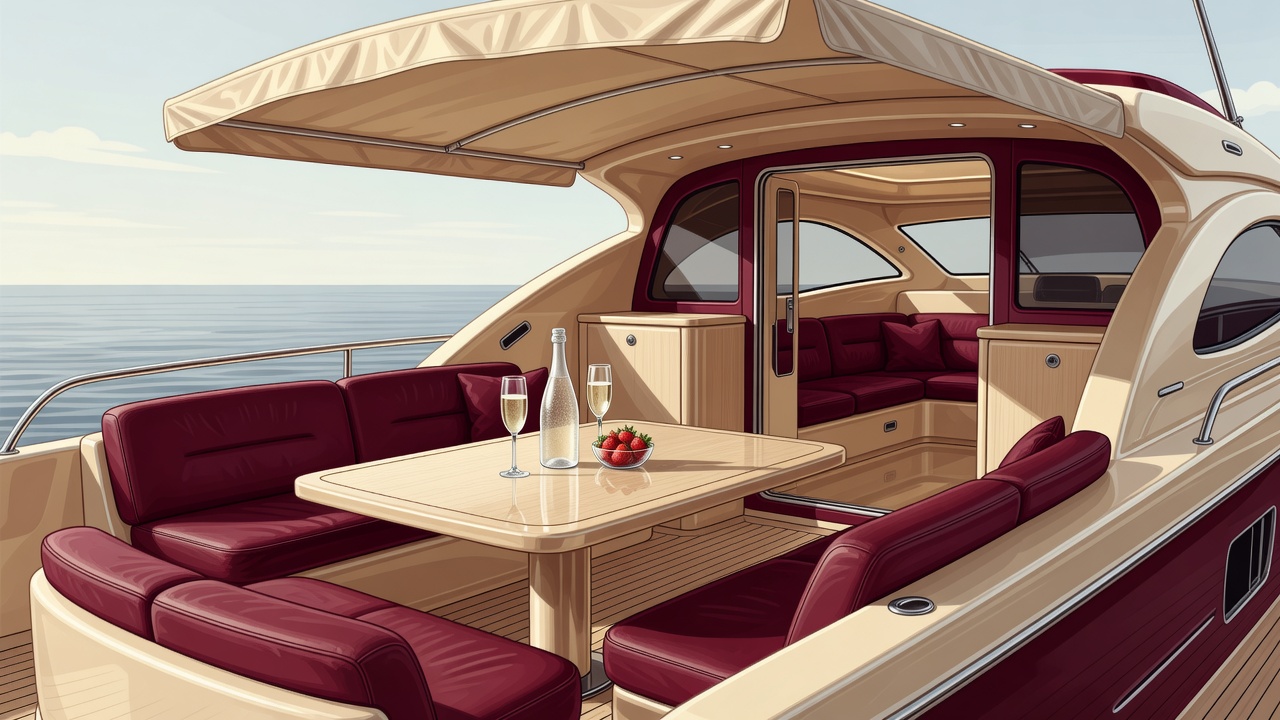
Comfort aboard is not a single feature or a category of yacht. It is the fit between the vessel, the people using it and the way the holiday is planned. A beautifully finished cabin may still be unsuitable for someone who finds its access difficult. A generous deck may offer little relief at midday if usable shade is limited.
Prepare a short, practical brief before choosing the vessel or finalising the route. Include sleeping preferences, mobility, food requirements, likely time ashore and the group’s tolerance for movement and machinery noise. Share relevant information directly with the operator and skipper, using an appropriate private channel for sensitive details.
Choose sleeping arrangements with real use in mind
Look beyond the advertised guest capacity. Ask which cabins have double or separate berths, how they are accessed, where bathrooms are located and whether crew spaces are genuinely separate. A saloon berth may be technically available but less suitable for someone who wants privacy or an early night.
Clarify ventilation and cooling in the conditions you expect. Air-conditioning may depend on shore power or a generator, and the operating pattern can affect noise and fuel use. Ask how the system is normally used overnight, what limitations apply and whether quieter alternatives are practical for the itinerary.
Make shade and movement part of the brief
Review photographs or plans for the exact yacht where possible, and ask how much seating remains shaded at different times of day. A sun awning may not be usable underway or in stronger wind. Check whether people can move safely between seating, cabins and bathing areas without awkward steps or obstructions.
Anyone with mobility concerns should discuss boarding, companionways, handholds, bathroom access and tender transfers in detail. Do not assume that a larger yacht or a luxurious description resolves those challenges. Where necessary, ask for measurements and a direct conversation about the person’s needs rather than relying on a general accessibility claim.
Understand the water and power routine
Fresh water, refrigeration, charging and cooling draw on systems with practical limits. Ask about tank capacity, normal replenishment plans and any watermaker operating restrictions. A watermaker should not be treated as a promise of unlimited supply or suitable operation in every anchorage. The crew’s instructions on water use remain important.
For electrical needs, confirm sockets, voltage and the equipment that can be used away from shore power. Medical devices require an early, specific discussion with the operator and an appropriate healthcare professional where relevant. Do not assume a domestic appliance or high-demand device will work safely aboard simply because a socket is present.
Provision for flexibility, not excess
Build meals around the group’s preferences, storage space and the possibility that a planned shore visit may change. Include straightforward food for passage days and a practical reserve agreed with the skipper. Avoid filling refrigeration with items that depend on a tightly timed itinerary or frequent shopping stops.
Discuss allergies and dietary requirements before supplies are purchased. Ask what can realistically be managed in the galley, including cross-contact concerns, and do not treat a menu preference as equivalent to a medically necessary precaution. Confirm drinking-water arrangements, reusable containers and where packaging and food waste will be handled ashore.
Keep safety familiar and unhurried
A comfortable group understands the basics before departure: how to move around, where to remain during manoeuvres, how to use the heads and what to do when the skipper gives an instruction. Safety equipment, including suitable lifejackets, must match the people aboard and the relevant requirements. Children need explicit supervision arrangements, not assumptions.
Anyone concerned about seasickness should seek individual advice from a qualified healthcare professional before travel, particularly when considering medication. Tell the skipper about comfort concerns so passage timing and suitable stops can be discussed. No route or vessel can guarantee freedom from motion, and stopping for a swim is always conditional on safety and local rules.
Agree the pace as well as the equipment
Talk about meals, quiet hours, shore visits, remote work and the balance between sailing and resting. Connectivity may be intermittent, restricted or chargeable; an onboard router does not guarantee continuous service offshore. Download essential documents in advance and avoid making the holiday depend on an uninterrupted connection.
The result should be a clear conversation rather than a long demand list. When everyone understands the vessel’s capabilities and the skipper has room to adapt, comfort becomes part of the voyage itself. A smaller set of well-chosen arrangements can offer more ease than a larger yacht used in a way that does not suit the group.